
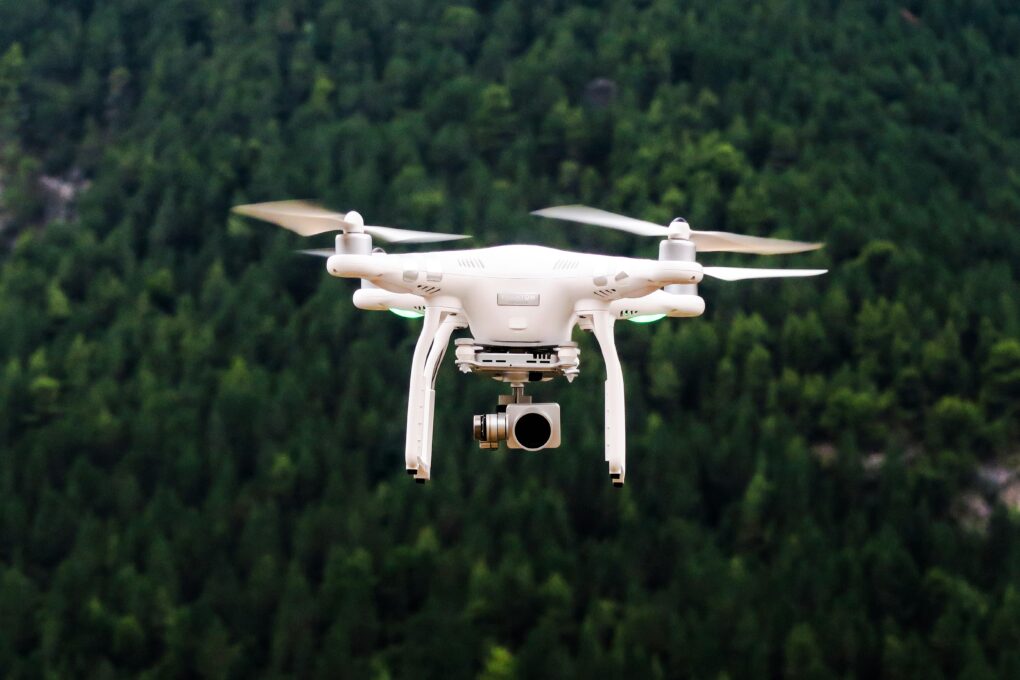
Learn about the Drone Business Industry and find information on how to start your own Drone Business. Don’t forget you can receive free or low-cost training and free professional business advice, from your local Small Business Development Center!
View our related business reports here: Artificial Intelligence Industry Resources, Manufacturing Industry Resources, Agriculture Industry Resources
Get a Drone business plan template on our Business Plans page.
Drone Business Forecast
As the drone industry continues to grow, investors and buyers are placing greater emphasis on dependable technology and industrial applications. As a result, the combined market value of publicly listed drone companies rose to $10.9 billion, indicating strengthening investor interest and new market opportunities. Additionally, recent research shows strong demand in agricultural drone applications, with 72% of current users planning to purchase or lease another drone and more than 60% of non-users expressing intent to adopt drones in the future. Beyond agriculture, growth in the U.S. drone market is projected to continue. The Federal Aviation Administration forecasts that recreational unmanned aircraft systems (UAS) will increase to 1.62 million units in use by 2030.
Looking ahead, operational indicators remain strong. The certified workforce is also expected to expand, with the number of remote pilots forecast to reach 522,000. Meanwhile new developments in artificial intelligence are enhancing drone capabilities, allowing aircrafts to autonomously adapt their behavior to changing environments. As industries increasingly adopt drones for public safety, surveying, agriculture, and manufacturing, these technological improvements may create new opportunities for drone service providers in the years ahead.
Here are some additional business resources specific to the industry:
- Resources – U.S. Federal Aviation Administration
- Drone Industry Insights – Resources
Drone Business Overview & Trends
NAICS Code: 541922, 541370, 811219; SIC Code: 7225, 8713, 7699
Drone businesses are an important contributor to the broader aviation and technology services industry. Reported analysis shows that 222 UAV developers collectively 593 unique drone platforms in the United States, with most companies focusing on smaller, commercially systems. The industry also highlights strong growth among domestic manufacturers, with some companies valued at over $2 billion making significant gains in applications supporting the military and first responders.
This geophysical surveying & mapping services summary is from First Research which also sells a full version of this report.
- “Companies in this industry gather, interpret, and map geophysical data. Major companies include Global Geophysical Services, and NuTech Energy Alliance (all based in the US), as well as Logan International (Canada), TGS ASA and Petroleum Geo-Services (both based in Norway), and WesternGeco (UK).
- Worldwide, oil and gas exploration drives demand for geophysical surveying and mapping services. To meet growing demand and make up for depletion of existing oil sources, new oil reserves must be discovered. The top five crude oil producers in 2024 were the US, Saudi Arabia, Russia, Canada, and China, according to Investopedia.
- The US geophysical survey and mapping services industry includes about 900 establishments (single-location companies and units of multi-location companies) with combined annual revenue of about $2 billion.
- Competitive Landscape: Demand is driven by oil and gas exploration activity. The profitability of individual companies depends on their ability to maintain a steady flow of contract work. Large companies enjoy economies of scale in purchasing and administration, as well as the ability to serve major clients from multiple locations. Small companies can compete by specializing in a specific geography or survey type. The industry is concentrated: the 50 largest companies account for about 80% of revenue.”
Drone Business Technology
Technology is a critical component in the drone business industry. Tools such as unmanned aerial systems (UAS), high-resolution cameras, sensors, and data-processing software are widely used across drone businesses. Here is information on technology usage in the drone industry:
- How AI, Quantum Computing And New Batteries Are Transforming Drones – Forbes
- The Future of Drones in Utility Infrastructure Maintenance – The Utility Expo
- What’s next for drones – MIT Technology Review
- Drone Technology – Facility Executive
For additional information on technology, visit our AI for Small Business Guide.
Drone Business Customer Demographics
Major customer segments for Unmanned Aerial Vehicle (UAV) Manufacturing are reported by IBISWorld which offers a full version of this report for purchase here.
- The U.S. drone manufacturing industry is segmented between civilian commercial customers and U.S. military buyers, with both defense procurement and commercial adoption driving overall revenue.
- Civilian commercial markets account for approximately 36.3% of industry revenue, making it the largest single segment. This reflects growing adoption across agriculture, infrastructure inspection, environmental monitoring, and other industrial applications as regulations and capabilities mature.
- Defense customers remain the largest source of demand, led by the U.S. Army (24.5%), U.S. Navy (21.7%), and U.S. Air Force (15.3%), with procurement driven by intelligence, surveillance, reconnaissance, and tactical mission requirements.
- Other defense markets account for 2.2% of industry revenue. This group utilizes UVA’s for various research, emergency detection and surveying.
- Ongoing contract renewals, research and development spending, and integration of UAV’s into existing military operations support sustained demand from defense markets, while advances in AI, sensing, and range continue to expand commercial use cases and revenue opportunities.
Additional information on drone business demographics can be found in a variety of trade associations and publications, including:
- Consumer views of drone delivery – McKinsey & Company
- Current Trends and Future in the Commercial Drone Industry – Commercial UAV News
Drone Business Startup Costs
Establishing a drone business requires an understanding of the startup costs involved in order to develop a sound financial plan. Whether you are launching a new operation or expanding into specialized services, there are several important costs to consider.
According to a cost breakdown reported by Business News Daily, drone business related costs are as follows:
- “Now with proper licensing and insurance taken care of, you’ll need to obtain the drone itself. If you’re shooting video for a client, they’ll likely want professional-looking footage that has sharp detail and bright, clean color. Although you might be able to get away with a cheap drone like the $559 DJI Mavic Air 2, you would be better off investing in a larger, more flexible drone like the DJI Mavic 3 Pro. This drone will allow you to shoot the same smooth 4K video you see on nature documentaries. It isn’t cheap, though; it will cost you about $2,200.
- Whichever drone you decide on, register it with the FAA. The FAA requires anyone who flies a UAS or drone that weighs 0.55 pound or more to register their device. Registration costs $5, and you must renew it every three years.”
Additional drone business startup cost information can be found at:
- How to Launch and Grow a Profitable Drone Business – Flying Mag
- “It depends on how specialized a niche you want to serve. In general, the more specialized the work, the more expensive the drone. You can start a drone business for less than $3,000 or spend hundreds of thousands of dollars depending on what services you plan to offer.”
Drone Business Plans
The following are sample drone business plans for reference. For additional business plan samples, visit our Business Plans Guide.
- Drone Photography Business Plan – Profitable Venture (1)
- Drone Rental Business Plan – Profitable Venture (2)
- Drone Business Plan – Growthink
- Drone Repair Service Business Plan – Profitable Venture (3)
Drone Business Associations
Trade associations often are excellent sources of information on an industry. Here are some relevant drone business associations:
- Commercial Drone Alliance
- National Business Aviation Association (NBAA)
- Association for Uncrewed Vehicle Systems International (AUVSI)
- Drone Advocacy Alliance
- U.S. National Drone Association
- Drone Service Providers Alliance (DSPA)
Drone Business Regulations
This section is intended to provide general awareness of drone business regulations and agencies to consider when starting your business. Check with your state and municipality for rules and regulations that may impact the business in your area.
Drone businesses are primarily regulated at the federal and state levels. According to the National Conference of State Legislatures, at least 44 states have enacted laws addressing unmanned aircraft systems (UAS). Their report also includes state-by-state legislative and regulatory updates on current drone laws.
- How to Register Your Drone – U.S. Federal Aviation Administration (1)
- Small Unmanned Aircraft Systems (UAS) Regulations – U.S Federal Aviation Administration (2)
- Updated Fact Sheet on State and Local Regulation of Unmanned Aircraft Systems (UAS) – U.S. Department of Transportation
Drone Business Publications & Resources
For resources to help market your drone business start up, visit our Digital Marketing Guide, Social Media Marketing Guide, and our Website Design Guide.
Drone Business Employment Trends
Understanding employment trends in your industry is important when opening a drone business. Drone businesses rely on a range of roles to operate effectively. Depending on the services offered, companies may rely on a range of skilled roles including pilots, technicians, data analysts, and technical support staff. The following are insights from the Bureau of Labor Statistics Occupational Outlook Handbook into Surveying and Mapping Technicians. A more specific breakdown of other drone business occupations is available from the Bureau of Labor Statistics.
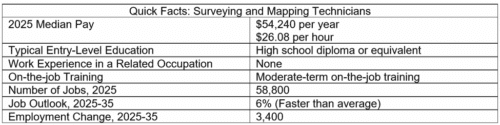
- “Pay: The median annual wage for surveying and mapping technicians was $54,240 in May 2025. The median wage is the wage at which half the workers in an occupation earned more than that amount and half earned less. The lowest 10 percent earned less than $37,520, and the highest 10 percent earned more than $81,630.
- Work Environment: Many surveying and mapping technicians work for firms that provide engineering, surveying, and mapping services on a contract basis. In local governments, these workers may be employed by highway or planning departments. Although they spend some time in an office setting, surveying and mapping technicians may be outdoors in all types of weather while conducting fieldwork. They may need to travel long distances, which might include temporarily relocating near a survey site.
- Job Outlook: Employment of surveying and mapping technicians is projected to grow 6 percent from 2025 to 2035, faster than the average for all occupations. About 6,900 openings for surveying and mapping technicians are projected each year, on average, over the decade. Many of those openings are expected to result from the need to replace workers who transfer to different occupations or exit the labor force, such as to retire.”
Additional Small Business Resources
Already in business or thinking about starting your own small business? Check out our various small business resources:
- View more business reports here: Small Business Snapshots
- View small business help topics here: Small Business Information Center
- View industry-specific research here: Market Research Links
- View business plans samples here: Sample Business Plans
- View our small business cybersecurity resources here: Small Business Cybersecurity
Remember, you can also receive free professional business advice and free or low-cost business training from your local Small Business Development Center!
Photo by Jason Mavrommatis on Unsplash