

Learn about the Pet Supply Store industry and find information on how to start a pet supply business. Don’t forget you can receive free or low-cost training and free professional business advice, from your local Small Business Development Center!
View our related business reports here: Pet Care Services Business
Get a Pet Supplies business plan template on our Business Plans page.
Pet Supply Store Business Forecast
The Pet supply industry is experiencing strong growth, even as it navigates several operational challenges affecting retail. A recent State of the Industry Report from the American Pet Products Association revealed that pet ownership continues to rise, with 51% of U.S. households owning a dog and 37% owning a cat. This expanding pet population has increased demand for premium pet care products, contributing to industry momentum. However, that momentum has been disrupted by ongoing operational challenges. Supply chain interruptions, and shortages of key pet food ingredients have led to inventory instability, and price fluctuations in the market. As a result, retailers may have to adjust how they manage sourcing, stocking, and overall operations to keep pace with shifting conditions.
As the industry looks ahead, several new trends are influencing consumer expectations and retail models. For example, the rise of “pet humanization” continues to push shoppers towards wellness-focused items, functional treats, and products that mirror human health trends. Additionally, growth in Gen Z pet ownership and the increase in multi‑pet households are driving stronger demand for an omnichannel experience. In response, retailers are expanding subscription programs and establishing e-commerce capabilities to meet these growing expectations. Moreover, research shows that sales of pet care products are outpacing other consumer categories, partly because shoppers are prioritizing eco‑friendly options such as biodegradable toys, organic foods, and sustainable grooming products. To support this shift, many retailers are also integrating AI tools to personalize product recommendations and enhance the overall pet supply shopping experience.
Here are some additional business resources specific to the industry:
- American Pet Products Association – Resources
- Pet Industry Distributor Association – Retailer Resources
- Pet Food Institute – PLFM Resources
- Pet Advocacy Network – Care Guides & Retail Resources
Pet Retail Industry Overview & Trends
NAICS Code: 453910, SIC Code: 5999
Pet Supply Stores are a significant part of the pet industry with a large impact on the US economy. In recent years, pet owners spent $151.9 billion on their pets according to the American Pets Product Association.
This Pet and Pet Supplies store industry summary is from First Research which also sells a full version of this report.
- “Companies in this industry operate physical retail establishments that sell pets, pet foods, and pet supplies. Major companies include Petco, Petland, and PetSmart (all based in the US); along with Global Pet Foods and Pet Valu (both based in Canada), and Pets at Home (UK).
- The global pet and pet care market may reach about $427 billion by 2032, growing at a compound annual growth rate (CAGR) of 6.6% from 2025 to 2032, according to Fortune Business Insights. North America and Western Europe are well-positioned for further growth through an uptick in consumer purchases.
- The US pet and pet supply store industry includes about 10,000 establishments (single-location companies and units of multi-location companies) with combined annual revenue of about $20 billion.
- Competitive Landscape: Pet ownership drives demand, and spending generally resists economic cycles. Profitability for individual companies depends on the ability to generate store traffic and effective merchandising. Large companies offer low prices and wide selections of both products and services. Small companies compete effectively by serving a local market, selling unique products, offering specialized services, or providing pet expertise. The US industry is concentrated: the 50 largest companies account for over 75% of industry revenue. Competitors include grocery stores, warehouse clubs, mass merchandisers, internet retailers, and some veterinary clinics.”
These Pet Products business market insights are derived from Euromonitor which sells a full version of their report.
- Due to a slower rate of price inflation and a decline in the growth of the pet population, the performance of pet products sales in the US is showing a significant decrease compared to recent years. However, there are still rapidly changing preferences in pet demographics and care. Consumers are now shifting their focus to the health and wellness of their pet, while limiting their spending on optional pet accessories.
- E-commerce for pet supplies is growing, despite concerns about rising delivery fees. It appeals to consumers seeking community and personal representation within brands, as well as membership benefits such as discounts and personalized experiences.
- Pet product growth is expected to remain low due to negative outlooks in the economy and inconsistent policies. Furthermore, government-related factors are likely to contribute to an increase in recession conditions, which places pressure on the stability of the supply chain.
The American Veterinary Medical Association provides a table with data on relevant pet statistics. Additionally, the AVMA provides a Pet Market Share Estimator for estimating the number of pets in a community using the human population of the area and the estimated rate of pet ownership.
Pet Supply Store Technology
Technology is an increasingly vital component of the retail pet industry. Tools such as smart feeders, wellness sensors, and pet health trackers, are being sold and used across pet supply stores that sell animals. Here is information on technology usage in pet supply stores:
- Innovation in Pet Industry – American Animal Hospital Association
- Tech Tools – World Pet Association
- AI Powered Tech – new AI powered pet technology
For additional information on technology, visit our AI for Small Business Guide.
Pet Supply Store Customer Demographics
Major customer segments for Pet Supply Stores are reported by IBISWorld which offers a full version of this report for purchase.
- The Pet Store market is segmented by consumer generation.
- Gen X contributes majority of industry revenue at 30.4%. As the financial providers of their households, they tend to fund pet expenditures, such as supplies or veterinary services. Their steady careers award them a considerable amount of disposable income that allows more spending on pet products than any other segment.
- Millennials account for 28.2% of industry revenue. A portion of this age group have children and own family pets that increases their spending. For the rest of this age group, delaying life events such as marriage or parenthood has contributed to humanization in this segment and spending on quality pet supplies.
- Baby Boomers make up 25.1% of industry revenue. Since many consumers in this segment are often at home or in retirement care, spending from this group is allocated more to premium products. Boomers rank above Gen Z and Millennials in humanizing their animals resulting in higher pet adoption.
- Gen Z contribute 16.3% to industry revenue. Due to having a small amount of disposable income, their spending focus solely on required essentials to care for pets. A great majority of the revenue contribution from this segment is supplied by Gen Z parents who take on the initial funding for pets.
Additional information on pet supply store demographics can be found in a variety of trade associations and publications, including:
- U.S. Pet Ownership Statistics – American Veterinary Medical Association (1)
- Pet Ownership – Animal Welfare Advancement
- Generational Pet Ownership & Pet Preference – Pet Food Industry (1)
- Facts + Statistics: Pet Ownership and Insurance – Insurance Information Institute
Pet Supply Store Business Startup Costs
Establishing a pet supply store requires an understanding of the startup costs involved in order to develop a sound financial plan. Whether you’re purchasing an existing store or selecting a location to build your own, there are many important costs to consider.
According to a cost breakdown reported by Chron, pet store related costs are as follows:
- “Initial costs for pet store startups vary greatly. Product resellers usually need $15,000 to $30,000 to get started, although home-based sellers can get away with much less. Pet product manufacturers may need as little as $30,000 or as much as $500,000 to get started.”
Additional pet supply store startup cost information can be found at:
- Pet Toys and Accessories – Entrepreneur Magazine
- “Startup Costs: $2,000 – $10,000
- Part Time: Can be operated part-time
- Franchises Available? Yes”
- How Much Does It Cost to Open a Pet Store Business? – Profitable Venture (1)
- “The cost for start-up inventory (stocking with a wide range of pets such dogs, cats, fish and birds and pet foods and pet supplies, such as collars, leashes, health and beauty aids, shampoos, medication, toys, pet containers, dog kennels and cat furniture et al) – $80,000
- The cost for store equipment (cash register, security, ventilation, signage) – $4,750
- From the rough estimate above, you will need a minimum of two hundred and forty – six thousand nine hundred and eighty USD ($246,980) to establish a medium scale but standard pet store in any city in the United States of America. Please note that this amount includes the salaries of all the staff for the first three months of operation.”
Pet Supply Store Business Plans
The following are sample pet supply store business plans for reference. For additional business plan samples, visit our Business Plans Guide.
- Pet Food Shop Business Plan – Profitable Venture (2)
- Pet Supplies Business Plan – LivePlan
- Pet Store Business Plan Template – Growthink
- Pet Store Business Plan Template – Business Plan Template
Pet Supply Store Business Associations
Trade associations often are excellent sources of information on an industry. Here are some relevant pet supply store industry associations:
- Pet Food Institute
- American Pet Products Association
- World Pet Association
- American Veterinary Medical Association
- American Humane
- Pet Industry Distributors Association
- Independent Pet Retailer Association
- National Retail Federation
Pet Supply Store Business Regulations
The section is intended to provide a general awareness of pet supply store regulations and agencies to consider when starting your business. Check with your state and municipality for rules and regulations that may impact the businesses in your area.
Brick and mortar pet supply stores must meet standard local occupancy, safety, and accessibility standards like other retail stores. However, if your pet supply store sells live animals, additional animal welfare regulations may apply.
- Regulation of Pet Food – U.S. Food and Drug Administration
- Animal Welfare Act and Animal Welfare Regulations – U.S. Department of Agriculture
- Animal Specialty Services, Except Veterinary – Occupational Safety and Health Administration
Pet and Retail Business Publications
Pet Supply Store Business Employment Trends
Understanding employment trends in your industry is important when opening a pet supply store. Pet supply stores rely on a range of roles to operate effectively. This could include cashiers, supervisors, or animal caretakers and groomers. The following are insights from the Bureau of Labor Statistics Occupational Outlook Handbook into Retail Sales Workers. A more specific breakdown of other pet supply store occupations is available from the Bureau of Labor Statistics.
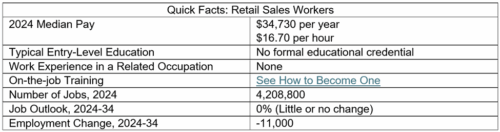
- “Pay: The median hourly wage for parts salespersons was $18.00 in May 2024. The median wage is the wage at which half the workers in an occupation earned more than that amount and half earned less. The lowest 10 percent earned less than $13.35, and the highest 10 percent earned more than $29.69.
- Work Environment: Retail sales workers spend most of their time interacting with customers, such as to answer their questions or assist them with purchases. Workers often stand for long periods. They may work outdoors if they sell items such as cars, plants, or lumberyard materials.
- Job Outlook: Overall employment of retail sales workers is projected to show little or no change from 2024 to 2034. Despite limited employment growth, about 586,000 openings for retail sales workers are projected each year, on average, over the decade. Most of those openings are expected to result from the need to replace workers who transfer to different occupations or exit the labor force, such as to retire.”
Additional Small Business Resources
Already in business or thinking about starting your own small business? Check out our various small business resources:
- View more business reports here: Small Business Snapshots
- View small business help topics here: Small Business Information Center
- View industry-specific research here: Market Research Links
- View business plans samples here: Sample Business Plans
Remember, you can also receive free professional business advice and free or low-cost business training from your local Small Business Development Center!
Photo by Kim Davies on Unsplash