

Learn about the Pet Care Industry and how to open your own Pet Care Services Business. Don’t forget you can receive free or low-cost training and free professional business advice, from your local Small Business Development Center!
View our related business reports here: Pet Supply Store Business
Get a Pet Care Service business plan template on our Business Plans page.
Pet Care Services Forecast
The pet care industry has entered a new phase of expansion, supported by a decade of rising pet ownership and consistently strong consumer engagement. In recent years, millions of households welcomed pets into their homes, fueling a sustained increase in spending. Today, even as owners navigate the ongoing costs of care, overall demand remains high and continues to push industry spending upward across multiple categories. Despite the sustained demand, some categories and experiencing different pressures. There is a notable decline in veterinarian services due to a decrease in visits and an increase in staffing shortages. Even with these challenges, a large share of pet owners continue to prioritize spending on concierge services, and often place their pets’ needs above their own.
Meanwhile, new trends are creating meaningful opportunities for more services. Pet care, grooming, and training services remain among the fastest‑growing areas, supported by the fact that 94 million U.S. households now own a pet. This increase has reshaped expectations and pushed businesses to adapt to evolving consumer needs. Veterinary clinics are incorporating telehealth solutions to combat the growing volume of untreated pets. These platforms provide services such as around‑the‑clock access to professional advice, and digital vaccine records. At the same time, the growing “pet humanization” movement is driving demand for organic premium treats, luxury grooming, and other elevated experiences. By staying responsive to these shifting preferences, pet care businesses can continue to build long‑term customer loyalty.
Here are some additional business resources specific to the industry:
- American Pet Products Association – Resources
- Pet Advocacy Network – Care Guides & Retail Resources
- National Association of Professional Pet Sitters – Industry Links
- World Pet Association – Resources
Pet Care Services Industry Overview & Trends
NAICS Code: 812910, SIC Code: 0752
This Pet Care Services industry summary is from First Research which also sells a full version of this report.
- “Companies in this industry provide grooming, specialized training, and boarding services for companion animals. Major US companies include Best Friends Pet Care, PETCO Animal Supplies, and PetSmart.
- The global pet care market is forecast to reach about $530 billion by 2032, at a 6.8% compound annual growth rate (CAGR), according to SkyQuest. Moreover, the growth in the pet foods market was driven by the spike in the number of pets around the world and the rising disposable incomes of people over the years. The US and Brazil are the regions with the most pet ownership, according to Dogster.
- The US pet care services industry includes about 18,500 establishments (single-location companies and units of multi-location companies) with combined annual revenue of about $5 billion. The industry includes animal shelters. Services provided by veterinarians and pet supplies retailers, which are not included in the industry, are covered in the Veterinary Services and Pet & Pet Supplies Stores profiles, respectively.
- Competitive Landscape: Demand is driven mainly by the number of cats and dogs kept as pets, which is affected by demographics and economic conditions. The profitability of an individual pet care company depends on marketing skills, reputation, and the range of services offered. Large companies enjoy economies of scale in marketing as well as better access to capital to invest in boarding and grooming equipment and in training programs.”
These Pet Care Services business market insights are derived from is from Euromonitor, which also sells a full version of this report.
- Despite price fluctuations and pressure on personal budgets, premiumization and pet humanization continue to fuel strong industry growth. Pet owners are still eager to pay for premium products and services. Some owners even choose to scale back their own spending as opposed to reducing the quality of the care their pets receive.
- Consumers are increasingly seeking organic pet food as concerns rise around “ultra‑processed” products. Recent food recalls have heightened these fears, pushing many pet owners toward influencer‑promoted brands that promise wellness, convenience, and premium care.
- Pet care e‑commerce is accelerating despite concerns over higher delivery costs. Shoppers are drawn to brands that offer community, self‑expression, and membership benefits.
- Pet care growth is expected to remain moderate, but it will be significantly influenced by rising political tensions related to trade, taxation, and immigration. While pet owners are likely to cut back on spending, they will continue to seek clear information about the benefits of specific ingredients.
The American Veterinary Medical Association provides a table with data on relevant pet statistics here. Additionally, the AVMA provides a Pet Market Share Estimator for estimating the number of pets in a community using the human population of the area and the estimated rate of pet ownership.
Pet Care Technology
Technology is becoming an increasingly important segment of the pet care industry. Tools such as wearables, automated feeding, inventory visibility, interactive toys, and digital health care are being actively adopted across pet care services. These innovations enhance consumer experience, whether in a pet boarding businesses or veterinary clinics. Here is information on technology usage in pet care services:
- Pet Tech Revolution – World Pet Association
- Veterinary Care Tech – accelerated use of pet health technology
- Innovation Trends – sustainability and technology in the pet care industry
- Technology Trends Outlook – explores technology that can enhance business operations
For more information on technology, visit our AI for small business Guide.
Pet Care Customer Demographics
According to the American Pet Products Association 2025 State of the Industry Report, Gen Z pet ownership is showing significant growth. Similarly, pet ownership among Millennial and Gen Z men is growing rapidly, with a significant increase in cat ownership.
Major customer segments for Pet Grooming & Boarding are reported by IBISWorld which offers a full version of the report for purchase here.
- The Pet Grooming & Boarding market is segmented by age group of pet owners.
- Consumers aged 45 to 64, make up the largest market for pet services at 38.2%. They have a significant amount of disposable income that allows them to spend more on premium services for their pets.
- Pet owners aged 25 to 44 account for 29.1% of the industry revenue. They have a tendency to purchase premium pet care service since they view their pets as integral family members, rather than animals.
- Consumers aged 65 and over make up 25.8% of industry revenue. This group seeks more affordable and necessary services rather than premium options. Coupons and discounts for routine visits will appeal most to this demographic.
- Younger generations ages 25 and under value high-quality care for their pets but lack the disposable income that allows them to make those purchases. Instead, they focus on necessary care services.
Additional information on pet care demographics can be found from a variety of trade associations and publications, including:
- U.S. Pet Ownership Statistics – American Veterinary Medical Association (1)
- Boomer Humanization of Pets – Pet Food Industry (1)
- Pet Ownership Statistics – Forbes
- Gen Z Pet Ownership – Pet Food Industry (2)
Pet Services Business Startup Costs
Starting a pet care service requires a solid understanding of the startup costs involved in order to develop a sound financial plan.
According to a cost breakdown reported by Small Business Chron (1), dog daycare start up costs are as follows:
- “For a dog daycare, the average cost of a commercial lease is $4,000 per month, but can run as low as $3,000 and as high as $7,000 per month. Lease amounts vary according to the size of the location, the features of the facility, etc. Dog daycare centers can be as small as 850 square feet.”
Additional pet care startup cost information can be found at:
- Dog Grooming Start Up Costs from Entrepreneur Magazine:
- Startup Costs: Under $2,000
- Part Time: Can be operated part-time.
- Franchises Available? Yes
- Online Operation? No
- Dog Walking Startup Costs from Small Business Chron (2):
- “Dog owners rely on dog walkers to take their pooches outside for exercise and to eliminate, while they’re away on vacation, on business trips or at the office. “Entrepreneur” Magazine suggest that the start-up costs for a dog walking business total less than $2,000. Before you start your dog walking business, visit a local pet supply store to find out the average costs for your start-up supplies.”
- How to Start a Pet Sitting Business from Growthink (1):
- The cost of starting a pet sitting business will vary depending on the type of services you plan to offer, the equipment you need, and any marketing or advertising expenses. For example, if you’re starting a dog walking business, you’ll need to purchase leashes, collars, and other supplies. If you’re starting an in-home pet sitting business, you’ll need to purchase insurance and bonding. To get a better idea of the costs associated with starting a pet sitting business, it’s a good idea to put together a detailed business plan. This will help you understand all of the expenses you’ll need to incur and how much revenue you’ll need to generate to be profitable. In some cases, pet sitting businesses have low start up costs and you can start a pet sitting business with as little as $500.
Pet Services Business Plans
The following are sample pet care business plans for reference. For additional business plan samples, visit our Business Plans Guide.
- Pet Sitting Business – Profitable Venture
- Pet Sitter Business Plan – The Finance Resource
- Dog and Cat Kennel Business Plan – LivePlan (1)
- Dog Obedience School Business Plan – LivePlan (2)
- Animal Day Care Business Plan – LivePlan (3)
- Dog Daycare Business Plan Template – Growthink (2)
Pet Care Business Associations
Trade associations often are excellent sources of information on an industry. Here are some relevant pet care industry associations:
- National Cat Groomers Institute
- National Dog Groomers Association of America, INC.
- American Pet Products Association
- American Veterinary Medical Association
- International Boarding & Pet Services Association
- National Association of Professional Pet Sitters
- American Humane
- American Kennel Club
- Pet Industry Distributors Association
- American Society for the Prevention of Cruelty to Animals
Pet Related Business Regulations
The section is intended to provide a general awareness of pet care service regulations and agencies to consider when starting your business. Check with your state and municipality for rules and regulations that may impact the businesses in your area.
Animal care services are regulated primarily at the local level and likely address information such as a maximum number of animals allowed, pet waste cleanup, and zoning concerns.
- Licensing and Registration Under the Animal Welfare Act – U.S. Department of Agriculture
- Animal Specialty Services, Except Veterinary – Occupational Safety and Health Administration
- Veterinary Safety and Health Hazard Prevention and Control – National Institute for Occupational Safety and Health
Pet Care Business Publications
- Pet Age
- Groomer to Groomer
- Kinship
- PETS+ (Petsplusmag.com)
- Daily Groomer
- Pet Boarding and Daycare
- PetVet Magazine
- Pet Food Industry
For resources to help market your pet care start up, visit our Digital Marketing Guide, Social Media Marketing Guide, and our Website Design Guide.
Animal Care Business Employment Trends
Understanding employment trends is important when opening any pet care service. A critical component as pet care services grow is hiring qualified help. The following are insights from the Bureau of Labor Statistics Occupational Outlook Handbook into Animal Care and Service Workers. A more specific breakdown of other pet care occupations is available from the Bureau of Labor Statistics.
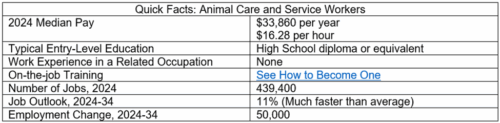
- “Pay: The median annual wage for animal caretakers was $33,470 in May 2024. The median annual wage for animal trainers was $38,750 in May 2024.
- Work Environment: Animal care and service workers are employed in a variety of settings, including kennels, zoos, stables, animal shelters, pet stores, veterinary clinics, and aquariums. Some parts of the job may be physically or emotionally demanding, and workers risk injury when caring for animals.
- Job Outlook: Overall employment of animal care and service workers is projected to grow 11 percent from 2024 to 2034, much faster than the average for all occupations. About 81,700 openings for animal care and service workers are projected each year, on average, over the decade. Many of those openings are expected to result from the need to replace workers who transfer to different occupations or exit the labor force, such as to retire.”
Additional Small Business Resources
Already in business or thinking about starting your own small business? Check out our various small business resources:
- View more business reports here: Small Business Snapshots
- View small business help topics here: Small Business Information Center
- View industry-specific research here: Market Research Links
- View business plans samples here: Sample Business Plans
Remember, you can also receive free professional business advice and free or low-cost business training from your local Small Business Development Center!
Photo by Jamie Street on Unsplash.