
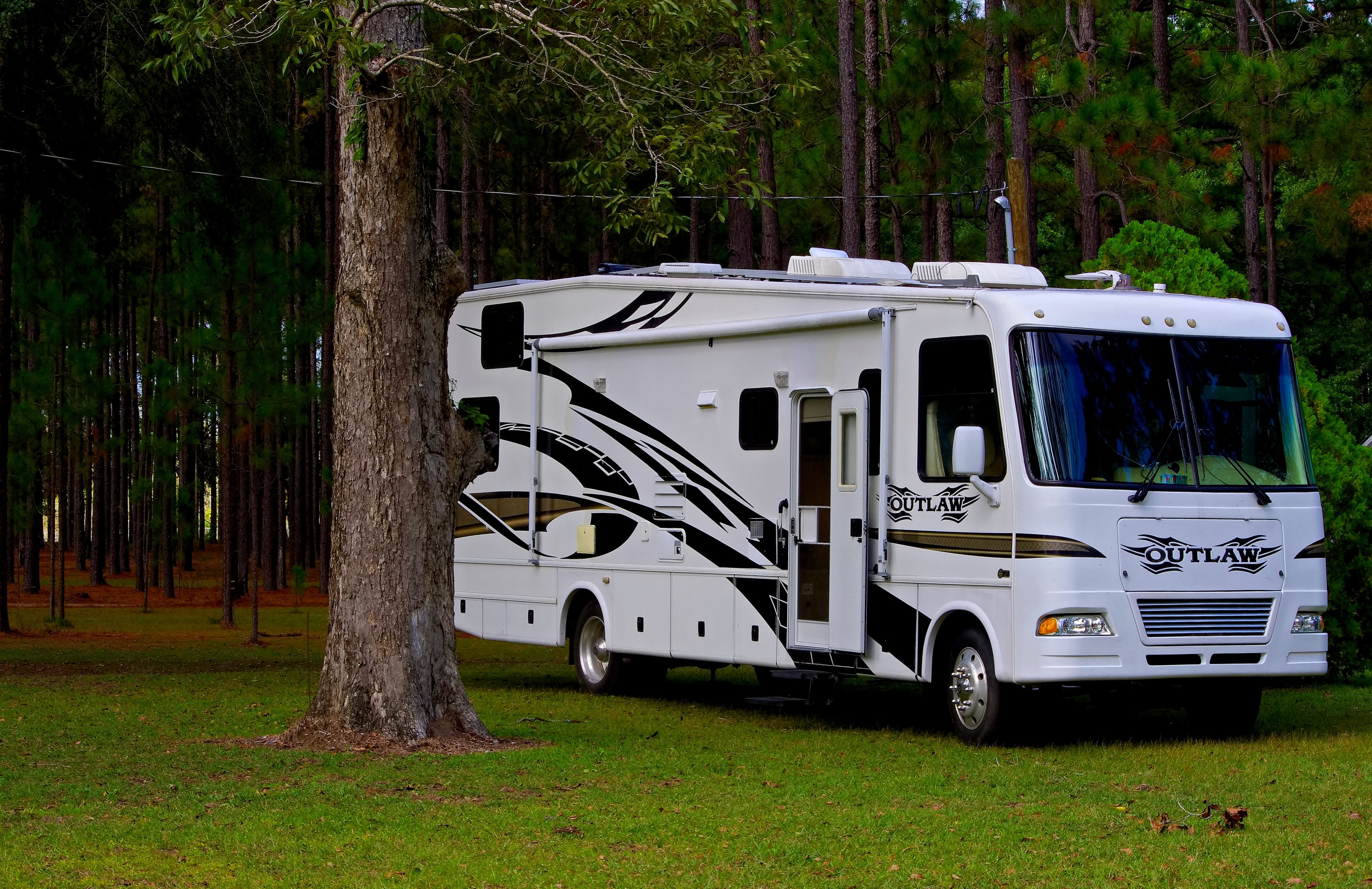
Learn about the RV Park and Campground Industry and find more information on how to open your own RV Park and Campground business. Don’t forget you can receive free or low-cost training and free professional business advice, from your local Small Business Development Center!
View our related business reports here: Travel & Tourism Industry Research
Get a RV Park and Campground business plan template on our Business Plans page.
RV Parks and Campgrounds Industry Forecast
RV parks and campgrounds are experiencing sustained momentum, fueled by rising RV ownership across generations, a growing interest in outdoor travel, and the steady introduction of new technologies. The most recent economic impact report from the Outdoor Hospitality Industry organization shows that the industry generated $1.2 trillion in economic output and supports 5 million jobs nationwide. Within that, RVing and camping alone account for $140 billion in economic activity, supporting 680,000 jobs. With continued investment in digital tools, AI, automation, and guest‑experience enhancements, these figures are expected to climb even higher in the coming years.
Despite this strong economic performance, the RV park and campground industry is navigating challenges brought on by rising interest rates, increased competition, and seasonal dips in activity. Even so, consumer demand for travel is at an all‑time high, providing a powerful counterbalance that continues to drive industry growth. Moreover, many consumers are not just seeking a place to park but a sense of community. This has prompted parks to expand amenities such as social events, food trucks, recreational rentals, pet‑friendly features, and shared gathering spaces. Looking ahead, these shifts represent not only challenges but also significant opportunities for parks that are ready to innovate and meet the expectations of today’s travelers and campers.
Here are some additional business resources specific to the industry:
- RV Industry Association – Members’ Guide To RV Industry Association Resources
- Outdoor Industry Association – Research Archive
- Outdoor Hospitality Industry – Resources
- American Hotel & Lodging Association – Resource Center
RV Parks and Campgrounds Industry Overview & Trends
NAICS Code: 721211; SIC Code: 7033
RV Parks are an important segment of the U.S. Outdoor Recreation Industry with a large impact on the U.S. economy. In previous years, participation in outdoor recreation grew by 3%, a record breaking 181.1 million people.
This RV Parks Industry summary is from First Research, which also sells a full version of this report.
- “Companies in this industry operate facilities to accommodate campers using tents, travel trailers, and recreational vehicles (RVs). Major companies include Kampgrounds of America (KOA) and Thousand Trails (both based in the US), as well as Camping and Caravanning Club and Parkdean Resorts (both based In the UK), Discovery Holiday Parks (Australia), and Siblu (France).
- The global camping and caravanning market is forecasted to reach more than $110 billion in 2029, at compound annual growth rate (CAGR) of 7%, according to the Business Research Company. Outside the US, RV camping (caravanning, as it is often called in Europe) is popular in countries including Canada, Australia, New Zealand, Norway, and Iceland, according to RV.com. RVs are growing in popularity in China as consumers spend more on vacations and leisure activities.
- The US recreational vehicle parks industry includes about 4,500 RV parks and campgrounds with combined annual revenue of about $3 billion.
- Competitive Landscape: Demand is driven by personal income and tourist travel. The profitability of individual campgrounds depends on site occupancy rate and effective marketing. Large campgrounds have advantages in diversity of site offerings and amenities. Small campgrounds can compete effectively by marketing to their target demographic and by obtaining desirable locations. The US RV parks and campgrounds industry is fragmented: the 50 largest companies account for about 30% of industry revenue. Most RV park operators are privately held, single-location companies.”
RV Parks and Campgrounds Technology
Technology usage is becoming an important component of the RV park and campground industry. Tools such as reservation systems, automated access, and energy management are being actively adopted on camps and RV sites. These innovations not only enhance efficiency but create a convenient and safe environment for residents. Here is information on technology usage in RV parks and campgrounds:
- Essentials for Attracting Campers – RV park software and tech-enabled experiences
- Emerging trends – Explores different tech trends that are reshaping RV parks and campgrounds
- Tech trends in the outdoor hospitality industry – Outdoor Hospitality Industry
- The Rise of Automating Systems – How RV parks can use automation systems to streamline operations
For additional information on technology, visit our AI for Small Business Guide.
RV Parks and Campgrounds Customer Demographics
RV ownership is expanding as new generations of travelers embrace more flexible, experience-driven ways to explore. A recent study shows that the largest segment of RV owners today consists of casual campers who prioritize scenic, approachable outdoor experiences. This highlights a shift in RV customers, from viewing RVing as a hobby to seeing it as a more enjoyable travel option.
Major customer segments for Campgrounds & RV Parks are reported by IBISWorld which offers a full version of this report for purchase here.
- IBISWorld estimates industry revenue to be approximately $10.9 billion, with market segmentation determined by generation of campers.
- Generation X, adults born between 1965 and 1980, contributes the most to industry revenue at 31.0%. This percentage is decreasing, as these consumers are nearing the point in their career where they can afford high-end hotel rooms as opposed to of low-cost campsites. This market is more willing to spend on luxury services which campsites can offer to attract this consumer group.
- Millennials, adults born between 1981 and 1996, contribute 26.0% to industry revenue. Similarly to Generation X, this percentage is decreasing as they are earning more money that allows them to afford more expensive vacation options.
- Generation Z, consumers born between 1997 and 2012, contribute 22.0% to industry revenue. Due to a small amount of disposable income, camping is the most favorable option for vacations.
- Baby Boomers, adults born between 1946 and 1964, make up the smallest amount of industry revenue at 21.0%. There is a strong demand for camping among these consumers, due to having a significant amount of free time and being on a fixed income. However, many older consumers in this group face higher risk of illnesses or injuries that prevent them from camping.
Additional information on RV Park and Campground demographics can be found in a variety of trade associations and publications, including:
- Millennials And Gen Z Reshaping The RV Industry – GO RVing
- RV Owner Demographic Profile Overview – GO RVing
- RV Park Consumer Demographics – CRR Hospitality
RV Park and Campground Startup Costs
Establishing an RV Park requires an understanding of the startup costs involved in order to develop a sound financial plan. Whether you’re purchasing an existing campground or selecting a site to build your own, there are many important costs to consider.
According to a cost breakdown reported by Entrepreneur Magazine, campground startup costs are as follows:
- Startup Costs: $10,000 – $50,000
- Home Based: Can be operated from home.
- Franchises Available? Yes
- Online Operation? No
Additional RV Park startup cost information can be found at:
- How Much Does It Cost to Build an RV Park? – Profitable Venture
- It costs anywhere from $15,000 to $50,000 per site to build an RV park and to get it fully functional. Your cost can get multiples among the number of campsites you want to own.
- How to Start My Own RV Camping Park – Small Business Chron
- First, decide where you want to have an RV camping park. You may be there for many years, so choose a geographic area you’re familiar with and that you enjoy. For example, if you’ve never seen snow you may not want to open an RV camping park in Maine. Now, it’s certainly easier and possibly cheaper to buy an existing RV camping park. Building your own means that you need to outfit each RV area to the cost of up to $20,000 per rental space, which adds up quickly. You’ll need to consider water hookups, waste disposal and electricity.
RV Park and Campground Business Plans
The following are sample RV Park and Campground business plans for reference. For additional business plan samples, visit our Business Plans Guide.
- RV Park Business Plan – Profitable Venture
- Campground Business Plan – Profitable Venture
- RV Park Business Plan Template – Growthink
- RV Park Business Plan – Business Plan Template
RV Parks and Campgrounds Business Associations
Trade associations often are excellent sources of information on an industry. Here are some relevant RV park and campground associations:
- Recreation Vehicle Industry Association
- Outdoor Industry Association
- American Hotel and Lodging Association
- Advancing Outdoor Hospitality
- Outdoor Recreation Roundtable Association
RV Parks and Campgrounds Business Regulations
The section provides a general awareness of RV park and campground regulations to consider when starting your business. Check with your state and municipality for rules and regulations that may impact the businesses in your area. Although there is no official agency regulating RV parks and campgrounds, standards exist for accessibility and fire protection:
- Standard for Recreational Vehicle Parks and Campgrounds – National Fire Protection Association
- Outdoor Developed Areas – United States Access Board
RV Parks and Campgrounds Publications & Resources
- Woodall’s Campground Management
- RV News
- RV Business
- The Dyrt Magazine
- RV Today
- RV Destinations Magazine
- RV Life Magazine
For resources to help market your RV park and campground start up, visit our Digital Marketing Guide, Social Media Marketing Guide, and our Website Design Guide.
RV Park and Campground Employment Trends
Understanding employment trends in the RV park & campground industry is important when opening an RV park. Lodging managers represent a major role within the industry as they oversee all operations on the property. The following are insights from the Bureau of Labor Statistics Occupational Outlook Handbook into Lodging Managers. A more specific breakdown of other assisted living occupations is available from the Bureau of Labor Statistics.
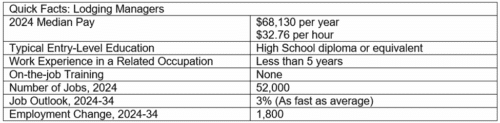
- “Pay: The median annual wage for lodging managers was $68,130 in May 2024.
- Work Environment: The pressures of coordinating a wide range of activities, turning a profit for investors, and dealing with dissatisfied guests may be stressful. Most lodging managers work full time. Work schedules may vary and often include evenings, weekends, and holidays. Because these facilities are open around the clock, some managers are on call 24 hours a day.
- Job Outlook: Employment of lodging managers is projected to grow 3 percent from 2024 to 2034, about as fast as the average for all occupations. About 5,400 openings for lodging managers are projected each year, on average, over the decade. Many of those openings are expected to result from the need to replace workers who transfer to different occupations or exit the labor force, such as to retire.”
Additional Small Business Resources
Already in business or thinking about starting your own small business? Check out our various small business resources:
- View more business reports here: Small Business Snapshots
- View small business help topics here: Small Business Information Center
- View industry-specific research here: Market Research Links
- View business plans samples here: Sample Business Plans
Remember, you can also receive free professional business advice and free or low-cost business training from your local Small Business Development Center!
Photo credit: Photo by Damon on Road on Unsplash