
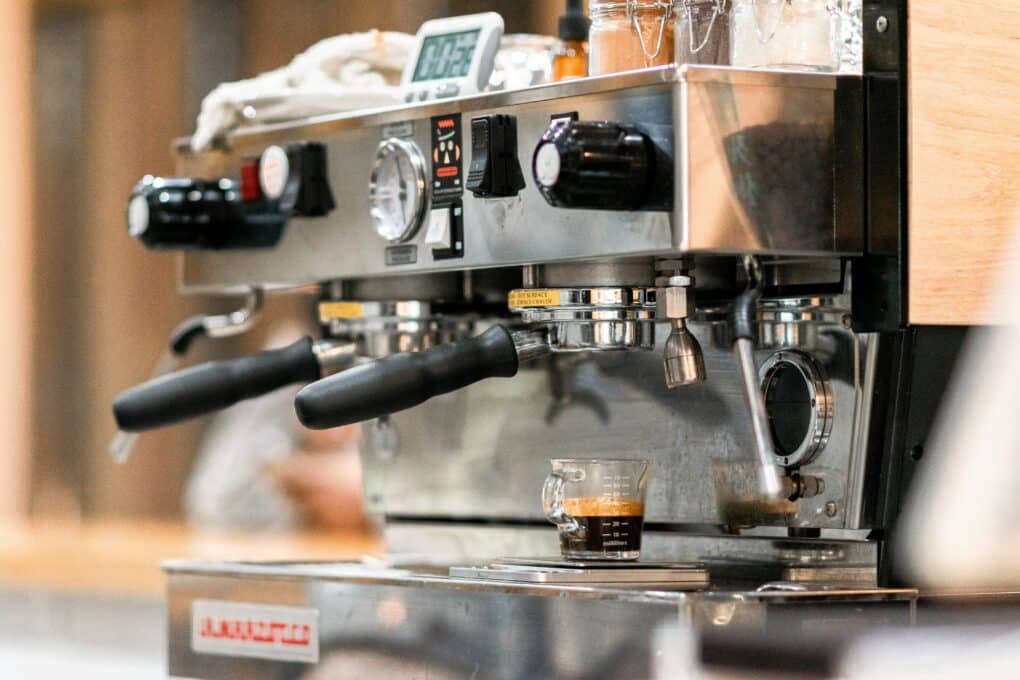
Learn more about the Coffee Shop Industry and find information on how to open your own coffee shop business. Don’t forget you can receive free or low-cost training and free professional business advice, from your local Small Business Development Center!
View our related business reports here: Bakery Business, Bookstore Business, Food Service Industry Resources, Beverage Manufacturing Industry Resources
Get a free Coffee Shop business plan template on our Business Plans page.
Coffee Shop Business Forecast
The coffee shop industry is evolving away from the “third‑place” model that once defined it and shifting toward a format based on efficiency. While some traditional cafes still focus on offering a space to linger and socialize, most coffee shops are catering to consumers with on-the-go lifestyles. At the same time, the supply chain is becoming more strained as coffee production faces additional stressors. Coffee growers are increasingly affected by climate change, and suitable farmland is gradually shrinking. Consequently, specialty coffee is likely to become more expensive, particularly as tariffs continue to push import costs higher. In fact, bean prices have already risen 21% in recent years, which places additional pressure on both independent cafés and large chains. Even with these challenges, the industry continues to grow. Demand remains strong given that a recent survey found that 90% of consumers still purchase coffee at least once per week.
Looking ahead, customers may be seeking high‑quality beverages with a wide range of customization options. Preferences also continue to shift as more consumers choose plant‑based dairy alternatives and specialty drinks. As convenience becomes increasingly important, coffee shops will need to find ways to create a smoother and more efficient customer journey. Drive‑thru lanes remain a valuable enhancement; however, investing in new technologies can further elevate the experience. Tools such as self‑service kiosks and loyalty programs help cafés deliver greater value, personalization, and ease. Coffee shops may need to focus on solutions that strengthen convenience and customization to meet the expectations of today’s coffee consumers.
Here are some additional business resources specific to the industry:
- National Coffee Association – Industry Resources
- Roast Magazine – Resources
- Coffee Quality Institute – Education Resources
Coffee Shop Business Overview & Trends
NAICS Code: 722515, SIC Code: 5812
Coffee shops are an important segment of the U.S. specialty eatery industry with a large impact on the U.S. Economy. The most recent National Coffee Association Impact Report shows the total economic impact of the coffee industry in the United States was $343.2 billion.
This Coffee Shop industry summary is from First Research, which also sells a full version of this report.
- “Companies in this industry sell coffee drinks and other food and beverages for consumption on the premises or for takeout. Major companies include Peet’s Coffee, Starbucks, and The Coffee Bean & Tea Leaf (all based in the US), as well as Caè Nero and Costa Coffee (both based in the UK).
- The biggest US coffee chains operate stores abroad, primarily through licensing agreements. In 2024, Starbucks owns and licenses about 40,000 locations worldwide. The world’s largest coffee consumers include Finland, Sweden, Norway, Denmark, Iceland, and the Netherlands among other countries, according to Economy Insights.
- The US coffee shop industry includes more than 60,000 stores with combined annual sales of about $40 billion. Coffee shops are part of the specialty eatery industry, which also includes outlets specializing in products such as bagels, donuts, frozen yogurt, and ice cream.
- Consumer taste and personal income drive demand. The profitability of individual companies depends on the ability to secure prime locations, drive store traffic, and deliver high-quality products. Large companies have advantages in purchasing, finance, and marketing. Small companies can compete effectively by offering specialized products, serving a local market, or providing superior customer service.”
These coffee shop business market insights are derived from Euromonitor, which also sells a full version of this report.
- Retail coffee value sales in the US are expected to grow, even as volumes slow due to consumer financial pressures and climate-related strain on global coffee supply. Consumers will still purchase coffee while remaining price conscious. More consumers will shift towards at-home brewing or ready-to-drink options.
- Artificial intelligence is playing a growing role in coffee production, especially as the industry looks for better ways to manage quality and improve efficiency across the supply chain. AI systems can strengthen crop and soil monitoring, and support AI‑enabled café and subscription experiences.
- Agentic models are tailoring drink orders and helping baristas shape roast profiles and blends. These tools opening new paths for aligning coffee processing more closely with consumer preferences.
Coffee Shop Technology
Technology is now a vital component to the coffee shop industry, reshaping how customers order, pay, and interact with their favorite cafés. Tools such as online ordering, mobile point of sale systems, and self-serve kiosks are being widely adopted across coffee shops. These innovations help create an easy and seamless experience for consumers ordering coffee, whether it be in person or online. Here is information on technology usage in coffee shops:
- AI integration in the self-service kiosk industry – Self-Service Kiosks Trends
- Scaling technology and AI use in the retail industry – National Retail Federation
- Use of AI, robots, and digital technology in the restaurant industry – Restaurant Industry Trends & Innovations
For additional information on technology, visit our AI for Small Business Guide.
Coffee Shop Business Customer Demographics
Major customer segments for coffee shops are reported by IBIS, which offers full versions of the report for purchase.
- The Coffee Shop market is segmented by industry revenue.
- High‑income earners with more than $100,000 in disposable income account for 47.3% of industry revenue, making them the largest contributor and a key driver of demand for premium coffee shop offerings. This segment also tends to dine out more frequently. However, recent employee reductions in the tech sector have led to a noticeable decline in their coffee shop visitations.
- Middle-income customers earning between $30,000 and $70,000 account for 32.9% of industry. This group typically opts for reasonable priced coffee and small snacks, as opposed to high-priced beverages.
- Low‑income consumers earning under $30,000 contribute 13.3% of industry revenue. Inflation has pushed this group toward homemade and lower‑cost alternatives, leading many to avoid coffee shop purchases altogether.
- Businesses represent the smallest share of industry revenue at 6.4%. The rise of remote work has reduced demand from corporate customers; however, the return to on‑site work is beginning to drive renewed revenue growth in this segment.
Additional information on coffee shop demographics can be found from a variety of trade associations and publications, including:
- The Rise Of Functional Beverages Among Millennials And Gen Z – Forbes (1)
- Gen-Z seen disrupting beverage trends – Food Business News
- Why Visually Striking, Functional Beverages Are Winning Consumers – The Food Institute
Coffee Shop Business Startup Costs
Establishing a coffee shop requires an understanding of the startup costs involved in order to develop a sound financial plan. Whether you’re purchasing an existing store or selecting a location to build your own, there are many important costs to consider.
According to a cost breakdown reported by Chron, coffee shop related costs are as follows:
- “The type of location and whether a coffee shop is independent or financed are both major determinants of startup costs. A coffee food truck can cost $50,000 to $150,000 to start up, while a kiosk may cost $60,000 to $100,000. Drive-through locations are typically $80,000 to $200,000, although smaller units can be less expensive. Sit-down locations typically cost between $80,000 and $275,000 to set up, and sit-down locations with a drive-through can cost between $80,000 and $300,000.”
Additional coffee shop startup cost information can be found at:
- Cost to Open a Coffee Shop from Toast (1):
- “The average cost to open a single coffee shop with seating is between $80,000-$300,000.
- The cost of opening a coffee food truck or kiosk is on the lower end (closer to $60,000 for the minimum possible cost), and including both seating and drive-through coffee is higher and can reach the $300,000+ range.”
- How to Start a Coffee Shop from Forbes (2):
- “No matter what, starting a coffee shop will have expenses, and these are essential for your operation. If you are choosing a brand-new retail location, it will be more costly to build and renovate than it will be to rent an existing location. Depending on the size and location of your coffee shop, cost can vary from $100,000 to $600,000.”
- The Total Cost to Open a Coffee Shop from Crimson Cup (1):
- “Coffee shop with seating only: $100,000 to $350,000
- Coffee shop with a drive-thru only: $100,000 to $250,000.
- Coffee shop with both seating and a drive-thru: $120,000 to $400,000″
Coffee Shop Business Plans
The following are sample coffee shop business plans for reference. For additional business plan samples, visit our Business Plans Guide.
- Coffee Shop Business Plan – LivePlan
- How to Write a Coffee Shops Business Plan – Toast (2)
- Coffee Shops Business Plan – Crimson Cup (2)
- Gourmet Coffee Shop Business Plan – The Finance Resource
- Coffee Shop Business Plan – Profitable Venture
Coffee Business Associations
Trade associations often are excellent sources of information on an industry. Here are some relevant coffee shop industry associations:
- National Coffee Association
- Specialty Coffee Association of America
- Coffee Roasters Guild
- Green Coffee Association
- International Coffee Organization
- Barista Guild
Coffee Shop Business Regulations
This section offers a broad overview of the regulation’s coffee shops should consider. Since requirements vary widely, it’s important to check with your state and local municipality for rules that may affect businesses in your area. Most food‑service regulations are established at the state and local levels, but several national standards also apply. Below are some of the key federal guidelines and frameworks to be aware of.
- State Retail and Food Service Codes and Regulations by State – U.S. Food & Drug Administration (1)
- Wages and Fair Labor Standards Act – U.S. Department of Labor
- How to Start a Food Business – U.S. Food & Drug Administration (2)
- Strengthening Organic Enforcement (SOE) Guide – National Coffee Association (2)
- NCA Coffee Product Labeling Guide – National Coffee Association (3)
Coffee Business Publications
- Fresh Cup Magazine
- Daily Coffee News by Roast Magazine
- Barista Magazine Online
- Beverage Industry
- Bon Appetit
- Roast Magazine
For resources to help market your coffee shop business, visit our Digital Marketing Guide, Social Media Marketing Guide, and our Website Design Guide.
Coffee Shop Business Employment Trends
Understanding employment trends in the food and beverage industry is important when opening a coffee shop. These establishments depend on a variety of staff including baristas and cashiers. The following are insights from the Bureau of Labor Statistics Occupational Outlook Handbook into Food and Beverage Service and Related Workers. A more specific breakdown of other food and beverage related occupations is available from the Bureau of Labor Statistics.
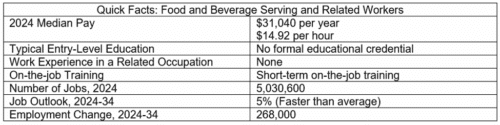
- “Pay: The median hourly wage for food and beverage serving and related workers was $14.92 in May 2024. Although some workers in these occupations earn tips, most get their earnings from hourly wages alone. In some restaurants, workers may contribute all or a portion of their tips to a tip pool, which is distributed among qualifying workers. Tip pools allow workers who do not usually receive tips directly from customers, such as dining room attendants, to be part of a team and to share in the rewards for good service.
- Work Environment: Food and beverage serving and related workers are employed in restaurants, schools, and other dining places. Work shifts often include early mornings, late evenings, weekends, and holidays. Part-time work is common. Food and beverage serving and related workers spend most of their shift on their feet. They carry trays of food, dishes, or glassware, which are often heavy. During busy dining periods, they are under pressure to serve customers quickly and efficiently.
- Job Outlook: Overall employment of food and beverage serving and related workers is projected to grow 5 percent from 2024 to 2034, faster than the average for all occupations. About 1,159,600 openings for food and beverage serving and related workers are projected each year, on average, over the decade. Many of those openings are expected to result from the need to replace workers who transfer to different occupations or exit the labor force, such as to retire.”
Additional Small Business Resources
Already in business or thinking about starting your own small business? Check out our various small business resources:
- View more business reports here: Small Business Snapshots
- View small business help topics here: Small Business Information Center
- View industry-specific research here: Market Research Links
- View business plans samples here: Sample Business Plans
Remember, you can also receive free professional business advice and free or low-cost business training from your local Small Business Development Center!